Reviewed · PLAIN OF JARS DAY TRIPS
Plain of jars tour with local guide
The Plain of Jars is more than a stop for strange stone vessels. This private day from Phonsavan links the three main archaeological sites with Ban Naphia, where villagers make spoons from aluminum bomb casings, and Muang Khoun, a former capital scarred by the Vietnam War. That mix of archaeology and living culture gives the day real purpose.
I like the easy hotel pickup and the fact that your group has its own vehicle and English-speaking driver-guide. I also like the pacing: you see Site 3, Site 2, and Site 1 in one day, with time to hear local stories and walk on your own. Guides named Mr Lar and Su are praised for clear explanations and attentive care.
The main drawback is the long, tightly timed day. You leave at 8:30 a.m. and return after the last stop, so this is not a lazy countryside outing. The non-refundable booking rule also means you should be sure of your plans before paying.
Key points at a glance
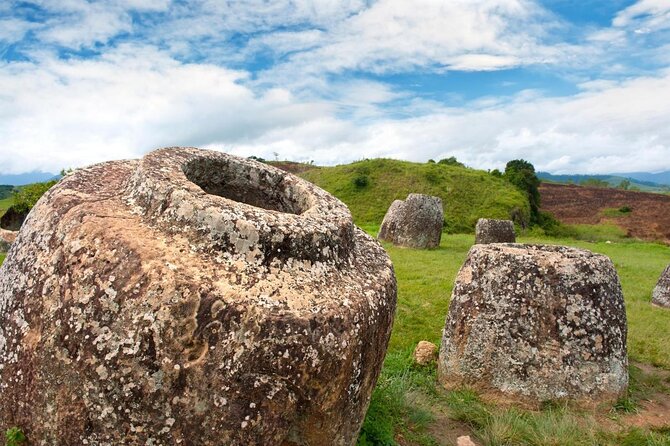
- Three jar sites in one day: Visit Sites 3, 2, and 1, each with a different setting and feel.
- Ban Naphia’s bomb-casing spoons: See how aluminum from wartime remnants becomes household goods for local and tourist markets.
- Muang Khoun after the bombing: Visit That Foun and Wat Phiawat in the former capital of Xieng Khouang.
- Private transport with pickup: Your group travels by private vehicle from your accommodation and returns there at the end.
- Lunch and fees included: The price covers lunch, transport, guide service, taxes, and listed admission fees. Soft drinks cost extra.
- A day built around explanation: Guides such as Mr Lar and Su add cultural context instead of simply pointing out the jars.
Why this Plain of Jars day is worth your time
The Plain of Jars can feel puzzling if you visit without context. Huge stone jars sit across open ground, but their original purpose and age are still discussed by researchers. A good guide helps you notice the details: the size of the jars, their placement, the surrounding rice fields, and the different feel of each site.
This tour works well because it does not treat the jars as an isolated monument. You also see a village shaped by the wartime past and a former regional capital damaged during the fighting from 1964 to 1973. That gives you a fuller picture of Xieng Khouang, where ancient remains and recent history share the same road.
Your guide and driver collect you at your hotel at 8:30 a.m. The first drive takes about 30 minutes to Ban Naphia in Phaxay district. From there, the day moves toward the jar sites, lunch near Lak Khai, Muang Khoun, and finally Site 1.
The private format matters. You do not have to match the pace of a large bus group, and your own group takes part in the activity. Still, the schedule is fixed enough that you should expect a full sightseeing day rather than a flexible private charter.
More Plain of Jars day trips:
- Plain of jars share group tour
★ 5.0 · 4 reviews - 3 Days The Plain of Jars and Xieng Khouan (Depart from Luang Prabang)
★ 5.0 · 3 reviews - Plain of jars private tour
★ 5.0 · 3 reviews
Ban Naphia and spoons made from bomb casings
Ban Naphia is home to more than 30 families, with many residents making a living by producing aluminum spoons. The metal comes from bomb casings left from the Vietnam War, then finds a new use in local markets and tourist sales.
This is one of the strongest parts of the day because the craft is practical, not staged only for visitors. You are seeing a source of income tied to the village’s past. The spoons also offer a direct way to understand how people in Xieng Khouang have adapted to materials left behind by war.
The stop lasts about 30 minutes, and admission is free. That is enough time to see the activity and understand its place in village life, though it is not a long workshop in which you produce an item yourself. If you want to buy a spoon, bring some spending money, since drinks are not included and purchases are separate from the tour price.
The village stop adds human scale to the day. The jars are mysterious and monumental. Ban Naphia is more immediate: people making goods, earning money, and carrying on with daily work. I would pay close attention here rather than treating it as a quick shopping pause.
Site 3: the first jars across the rice field
Around 10:00 a.m., you reach Plain of Jars Site 3 in Ban Xieng Di. The walk from the road takes about ten minutes across a rice field. That short walk is part of the experience, since your guide can explain how the rice season affects the ground and the surrounding work.
The site visit lasts about 45 minutes. Compared with Site 1, Site 3 gives you a quieter introduction to the jars. You cross open farmland, then find the stone vessels placed across the site. The approach helps you see that these are not objects arranged in a museum hall. They occupy real working ground.
Wear shoes suited to a short walk over a field. The supplied information does not promise a particular surface or weather condition, so you should be ready for changing ground. Most travelers can participate, but anyone who dislikes walking should keep the ten-minute access route in mind.
This is also a good point to ask questions. The guide can explain the local setting and the stories connected with the jars. The strongest praise for guides such as Mr Lar and Su focuses on this kind of explanation, along with leaving enough time for you to look around by yourself.
Site 2 near Lak Khai
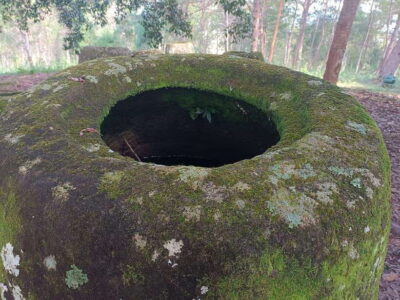
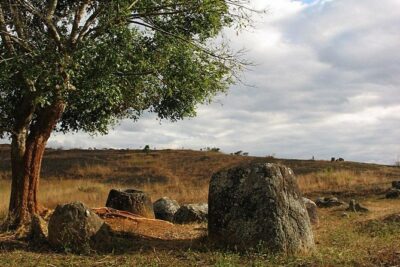
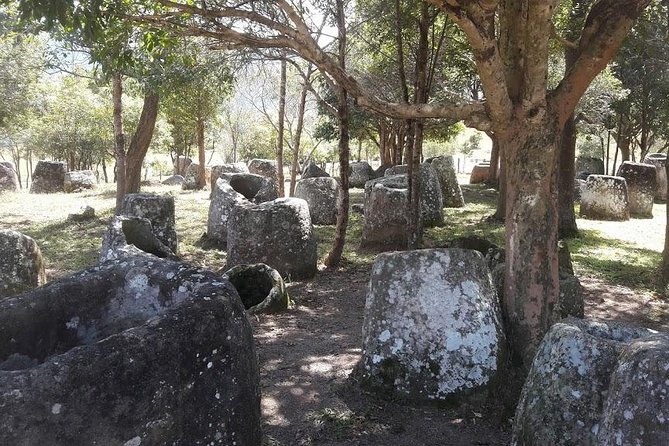
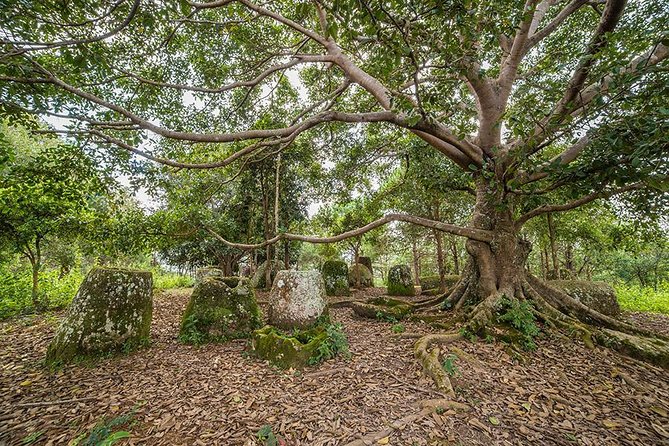
After lunch at Lak Khai at about noon, you continue to Site 2 near Ban Nakho. The stop lasts roughly 35 minutes. It has a different character from Site 3, with large trees growing inside some of the jars.
The trees create one of the most memorable sights of the day. They show how long these heavy stone vessels have remained in place and make the site feel less formal and more connected to the surrounding countryside. The jars at Site 2 are also described as taller and longer than those at Site 3.
Do not expect every stop to provide the same scale as Site 1. Site 2 is shorter, and its appeal comes from the setting and the details rather than from the largest number of jars. If you enjoy photography, this is a useful contrast: stone, tree trunks, open ground, and older vegetation give the site a different look.
Lunch is included, which keeps the day simple. Soft drinks are not included, so plan to pay for those yourself. The schedule allows you to eat before visiting Site 2, rather than trying to squeeze a meal into the final part of the afternoon.
A few more Laos trips worth a look
- Vientiane Cultural Tour with Private Guide
★ 5.0 · 80 reviews - From Luang Prabang: Guided Mountain Bike Tour with Lunch
★ 4.7 · 72 reviews - 1-Day Tour to Vang Vieng with Private Guide
★ 5.0 · 16 reviews - One Day Guided Tour: Kayaking, Zipline & Tubing In The Cave from Vang Vieng
★ 4.0 · 15 reviews
Muang Khoun, That Foun, and Wat Phiawat

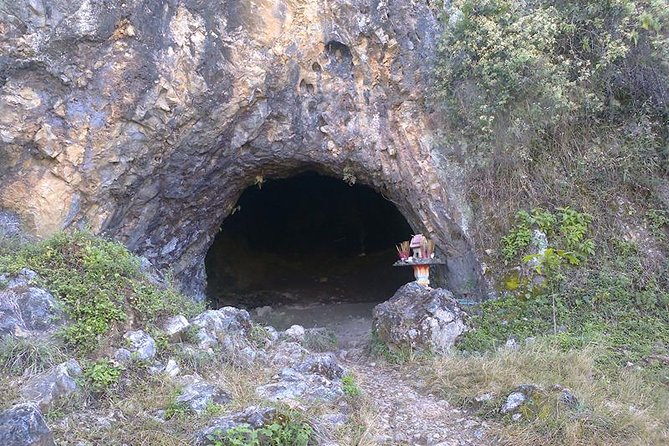
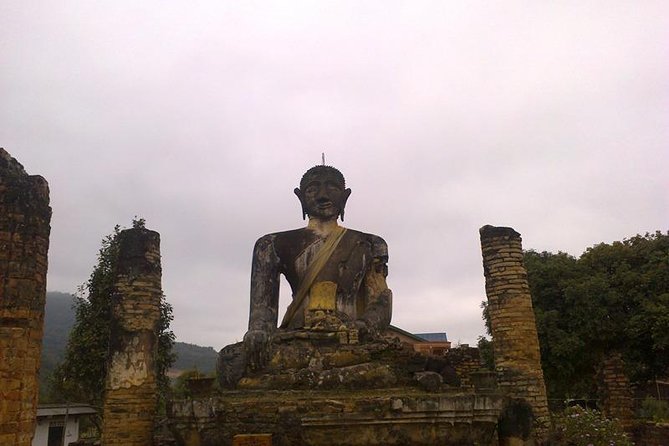
At about 2:00 p.m., the tour reaches Muang Khoun, the former capital of Xieng Khouang. The town was heavily bombed during the Vietnam War, and the visit shifts the focus from ancient archaeology to a more recent and painful part of the region’s past.
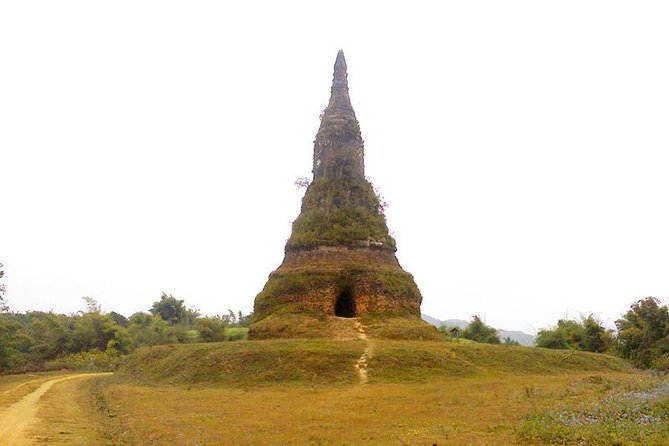
You see That Foun and Wat Phiawat during the one-hour stop. These remains help explain that Muang Khoun was once a political and religious center, not simply another rural point on the way to the jars.
The contrast with the morning is valuable. The Plain of Jars raises questions about a distant past. Muang Khoun shows the damage caused within living memory. You are not just collecting scenic stops; you are moving through several layers of Xieng Khouang’s story.
The supplied details do not specify how much walking is required at each monument, so listen to your guide about where to go and how long to remain. The one-hour allowance should give your group time to see the main remains without rushing through the stop.
Site 1 and the largest group of jars
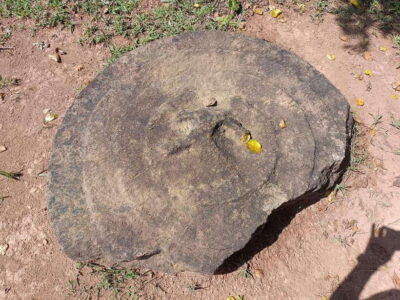
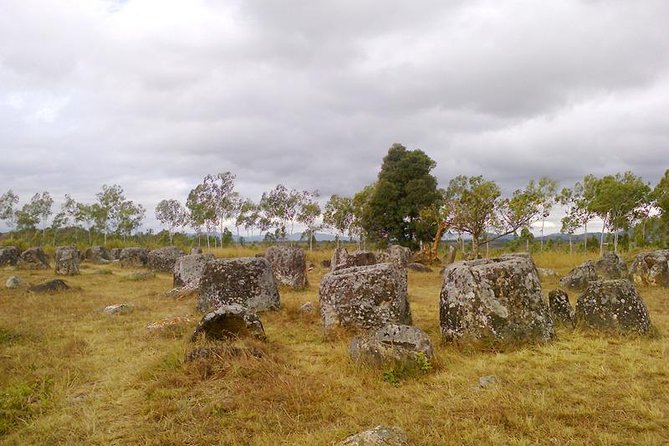
The final destination is Site 1, reached around 3:30 p.m. It contains 334 jars, with an estimated weight of more than six tons. Transport continues to the final location, followed by the return to your hotel.
Site 1 is the grand finish because of its number and scale. After seeing the smaller groupings at Sites 3 and 2, you have a useful basis for comparison. You can notice how the jars differ in size, how they are spread across the ground, and how each setting changes your sense of the monument.
The visit lasts about 40 minutes. That is enough for a focused walk and photographs, but not an open-ended exploration. If you want time to study every jar, ask questions, and wander slowly, the schedule may feel brisk.
Still, finishing here makes sense. Site 1 gives the day its strongest archaeological punch, while the earlier stops prepare you to see it with more understanding. The order also avoids using the largest site as your first and only impression of the Plain of Jars.
Guide quality and the private format
The guide can make or break a site like this. The jars do not come with long labels explaining their makers, purpose, or place in local culture. You need a guide who can provide background without turning the day into a lecture.
Mr Lar is specifically praised for explaining cultural meaning clearly and for keeping the day well paced. Su is also praised for explaining the sites and the different stories about the jars, while helping with practical needs along the way. Since guide assignments can vary, you should treat these names as examples of guides associated with the experience, not a guaranteed assignment.
The private format gives you one major advantage: your group controls the conversation. You can ask about the rice fields, the spoon-making village, the bombing of Muang Khoun, or the stories attached to the jars. You also have time to explore independently at the sites, rather than staying shoulder to shoulder with a large group.
The tradeoff is price. At $146, this is not the cheapest way to see the Plain of Jars, especially for one person. But the amount includes private transportation, an English-speaking driver-guide, lunch, all fees and taxes, and hotel pickup and drop-off. Group discounts are offered, so the value improves when several people share the booking.
What the $146 price really covers
I would judge the price as reasonable for a small group that wants a simple, organized day. Three archaeological sites are spread across the area, and private transport removes the need to arrange separate rides between them. The hotel pickup is also useful in Phonsavan, where you may prefer not to spend the morning sorting out local transport.
Lunch is included, as are all listed fees and taxes. That makes your spending easier to plan. You still need money for soft drinks and any purchases at Ban Naphia.
For a solo visitor, the cost is harder to justify unless convenience and a private vehicle matter a lot. For two or more people, the group format and discounts may make the calculation more attractive. I would compare the cost with what separate transport, a guide, meals, and entrance fees would add up to on your own.
The experience is also a good fit if you have only one full day in Phonsavan. It covers the major jar sites and adds two stops that explain local life and the region’s wartime past. If you have several days, you might prefer a slower schedule, but this tour makes efficient use of one day.
Timing, comfort, and who should book
Plan for about eight hours, with an early start at 8:30 a.m. The route includes a short walk across a rice field at Site 3 and walking around the archaeological and historic stops. Most travelers can take part, but the tour is not designed as a no-walking vehicle-only outing.
The timetable is clear:
- 8:30 a.m.: Pickup at your accommodation
- Around 9:00 a.m.: Ban Naphia
- Around 10:00 a.m.: Site 3
- Noon: Lunch near Lak Khai, followed by Site 2
- 2:00 p.m.: Muang Khoun
- 3:30 p.m.: Site 1
- After the final visit: Return to your hotel
The schedule leaves room to explore at the jars, but each stop has a set duration. I would book this if you like a full day with several related subjects. It suits people who want both major sights and a local economic story, rather than only a quick photograph of the largest jar field.
It may not suit you if you prefer long meals, unplanned stops, or a very slow pace. The private vehicle gives you more control than a large group, but it does not turn the day into a completely flexible road trip.
Practical booking advice before you pay
Confirmation arrives at the time of booking, and pickup and drop-off at your accommodation are offered. The activity is private, so only your group takes part. It is also near public transportation, though the included pickup may be more convenient for this route.
The cancellation policy deserves attention. The booking is non-refundable and cannot be changed for any reason. Do not reserve until your Phonsavan plans are firm.
There is no separate accessibility statement beyond the note that most travelers can participate. Because Site 3 includes a ten-minute walk across a rice field and the other stops involve visiting outdoor and historic areas, ask the provider directly if you have specific mobility needs.
Bring money for soft drinks and village purchases. The listed price covers lunch and fees, but not extras. A private tour also works best when you tell your guide what interests you, since you have the chance to ask questions at each stop.
Should you book the Plain of Jars tour with a local guide?
Book it if you want the main Plain of Jars sites in one organized day, plus a meaningful look at Ban Naphia and Muang Khoun. The combination is the real strength: ancient stone jars, a village turning bomb metal into spoons, and a former capital marked by wartime damage.
I especially like the clear route, included lunch, hotel transport, and the chance to explore the sites without a large group. The explanations from guides such as Mr Lar and Su add value at places where the physical remains alone may leave you with more questions than answers.
Skip it if $146 is too high for your group, if you need a refundable booking, or if you want a loose schedule with long stops. For everyone else, this is a practical way to make one full day in Phonsavan count, with enough variety to keep the jars from becoming a one-note sightseeing stop.
FAQ
How long does the Plain of Jars tour last?
The tour lasts approximately eight hours. Pickup is scheduled for 8:30 a.m., and the final stop at Site 1 is around 3:30 p.m., followed by transport back to your hotel.
Which Plain of Jars sites are included?
The tour includes Plain of Jars Sites 3, 2, and 1. Site 3 is in Ban Xieng Di, Site 2 is near Ban Nakho, and Site 1 contains 334 jars.
Is transportation included?
Yes. The experience includes private transportation, hotel pickup, and transport back to your accommodation after the final stop.
Is lunch included?
Yes. Lunch is included in the tour price. Soft drinks are not included.
Is this a private tour?
Yes. Only your group takes part in the activity, and an English-speaking driver-guide accompanies you.
Can the tour be cancelled or changed after booking?
No. The experience is non-refundable and cannot be changed for any reason after booking.
Just added around Laos
- Luangprabang: Dinner with Lao Traditional Dance Performance★ 4.0 · 3 reviews
- Vientiane: Lao Cultural Attire Rental Experience★ 5.0 · 3 reviews
- Vientiane Private Lao Cooking Class with Market Tour★ 4.0 · 3 reviews
- Vang Vieng: Zipline&Water Cave&Tham Chang&Blue Lagoon 1★ 5.0 · 3 reviews
- Vientiane: Half-Day City Tour – Morning or Afternoon★ 4.0 · 3 reviews
- Vientiane Private Walking Tour With A Guide (Private Tour)★ 4.5 · 3 reviews
- Luang Prabang Night-time Explorer★ 3.5 · 3 reviews
- Sunset Cruise in Luang Prabang with Live Performance★ 4.5 · 3 reviews
Plain of Jars Day Trips, compared.