
Reviewed · BUDDHA PARK TOURS
Vientiane City Day Tour and Buddha Park Visit with Lunch | Laos
Vientiane’s best sights are spread across temples, monuments, craft workshops, and the Mekong edge, so this 8-hour private tour gives you a useful first look without arranging several separate rides. The mix is especially good: Wat Si Saket brings quiet religious detail, Patuxai adds modern Lao history, and Buddha Park supplies the day’s strangest statues.
I like the hotel pickup and drop-off, which saves you from sorting out transport in the heat. I also like the range of stops, from more than 8,000 Buddha images to natural-dyed textiles and a giant reclining Buddha. The main caution is price: at $130 per person, lunch and transport need to matter to you, since the included meal may be quite simple.
Key points to know before booking
- More than 8,000 Buddha statues: Wat Si Saket’s cloister is the most detailed stop for seeing traditional religious art in one place.
- Pha That Luang is the symbolic centerpiece: Allow time to appreciate Laos’ most important national monument.
- Buddha Park is unusual rather than polished: Its Hindu and Buddhist sculptures are imaginative, large, and sometimes odd.
- Carol Cassidy Lao Textiles adds a hands-on craft angle: You learn how weaving and natural dyes shape Lao fabric.
- Khong and Algo G received strong praise: A good guide can make the historical parts far more rewarding.
- The day includes lunch, water, and private transport: That improves convenience, but the $130 price still deserves a careful value check.
What this Vientiane day tour is really designed to do
This is a broad introduction to Laos’ capital, not a slow temple study. You move between central Vientiane, major monuments, a textile stop, and Buddha Park, with driving between the areas and walking at each site.
The private format matters. Only your group takes part, so you can ask questions, move at a comfortable pace, and avoid waiting for a large coach group. The experience begins around 8:30 a.m. and ends with hotel drop-off in the late afternoon, giving you a full day but not an exhausting evening schedule.
The English-speaking guide is central to the experience. Guides named Khong and Algo G were praised for being friendly, attentive, energetic, and good at explaining both individual sites and Laos’ wider story. One guide received credit for adding special facts that would be easy to miss without local help.
That quality may vary by guide, and one assessment found the English adequate but the explanations too limited unless prompted. My advice is simple: ask questions early. Ask about the 1828 Siamese war, the meaning of the stupa shapes, the stories behind the statues, and modern Lao history at Patuxai. You will get more from the day if you treat it as a conversation, not just a ride between photo stops.
More Buddha Park visits:
- Vientiane: Cultural Tour with Buddha Park and Patuxay
★ 4.6 · 74 reviews - Vientiane: Half-Day City Tour with Patuxai and Buddha Park
★ 4.5 · 57 reviews - Vientiane City Highlights Tour with Buddha Park & Lunch
★ 4.7 · 38 reviews
Wat Si Saket and its 8,000 Buddha images
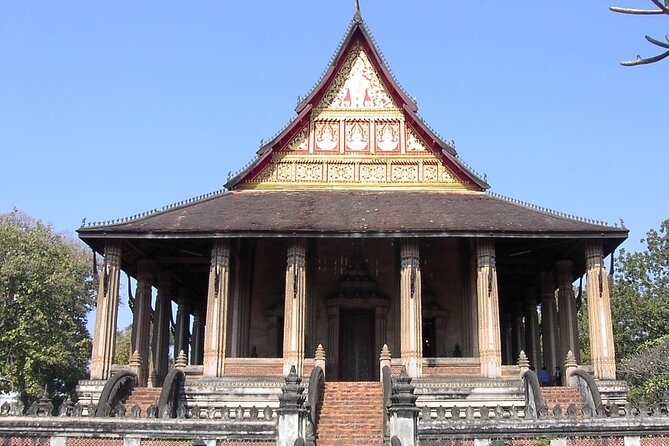
Wat Si Saket is the first stop, with about an hour allotted. It is described as the oldest temple in Vientiane to have survived the Siamese war of 1828, which gives the site a special place in the city’s story.
The main attraction is the cloister, lined with more than 8,000 Buddha statues. Instead of seeing one large image in an empty hall, you get layer upon layer of figures in different sizes and arrangements. This makes the visit visually dense and gives you plenty to examine while the guide explains the temple’s role.
The site also includes religious museum displays and the Emerald Buddha. The name will be familiar to anyone who has studied Southeast Asian Buddhist history, but the key point here is the connection between Vientiane, Siam, and the movement of important religious images across the region.
You should expect a walking visit rather than a strenuous one, but Laos can be hot, and the day includes several outdoor stops. Wear light clothing that respects temple customs, bring sun protection, and carry the drinking water provided.
Pha That Luang, Laos’ most important monument
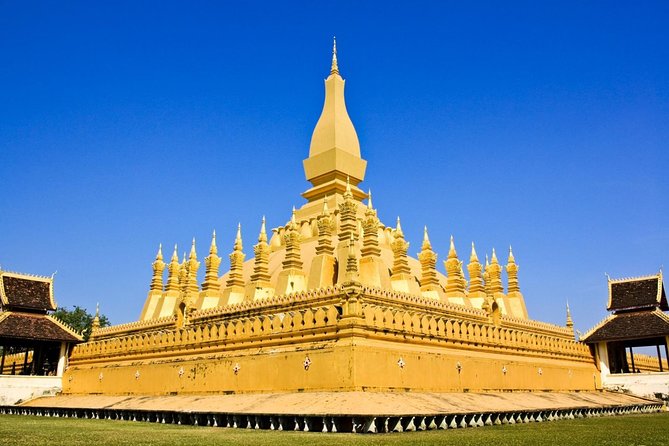
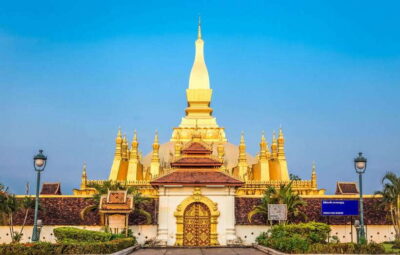
The tour gives about two hours to the Great Sacred Stupa, also called Pha That Luang. This is the national symbol of Laos and the one monument on the route that you should not rush.
Pha That Luang was built over a smaller stupa believed to hold part of Buddha’s breastbone. That sacred connection explains why the monument carries such weight in Lao religious life and national identity.
The large golden stupa is the focus, but the surrounding grounds also give you space to take in the design and scale. Your guide can help explain why this monument matters beyond its appearance. Without that context, you might simply see a grand gold structure and move on.
Two hours is generous compared with a quick photo stop. It allows time for walking, photographs, and questions. It also helps balance the day, since Buddha Park is visually unusual while Pha That Luang offers a more formal and traditional sense of place.
The drawback is the heat. One person found the outdoor sites less enjoyable and did not want to climb stairs in the midday warmth. You should expect sunshine and some walking, so comfortable shoes and a hat are sensible. If you tire easily, tell your guide rather than trying to keep pace.
Patuxai and the modern story of Vientiane
Patuxai comes next. The monument is a triumphal arch built to commemorate people who died during World War II and the struggle for independence from France. It now serves as one of Vientiane’s best-known landmarks.
This stop changes the mood of the day. Wat Si Saket and Pha That Luang focus on religious tradition, while Patuxai points toward the country’s more recent political past. It is useful to see both sides of Vientiane in a single outing.
The schedule groups Patuxai with lunch and allows about three hours for this part of the day. The exact amount of time at the arch may vary, since the published timing also covers the meal and the transfer that follows. Ask your guide to explain the monument’s wartime and independence connections if the first explanation feels brief.
Patuxai is also a good point to judge the pace of your private tour. If you want more time for photographs or a closer look, you can ask. The private setup gives you more flexibility than a fixed large-group outing, though the guide still has to keep the full route moving.
A few more Vientiane trips worth a look
- Vientiane: Private Full-Day Tour with Buddha Park and Lunch
★ 4.8 · 33 reviews - Vientiane Private Full-Day Tour with Buddha Park and Lunch
★ 4.5 · 17 reviews - From Luang Prabang: Guided Mountain Bike Tour with Lunch
★ 4.7 · 72 reviews - Vang Vieng: Blue Lagoon and Countryside Bike Tour with Lunch
★ 4.0 · 36 reviews
Lunch at a local restaurant
Lunch is included at a local restaurant, along with drinking water. This is convenient because you do not need to find a meal during a busy sightseeing day.
The meal appears to be straightforward rather than a special dining event. One account described a bowl of pho costing roughly $3, while other accounts praised the lunch as delicious and enjoyed the restaurant choice. That tells you to think of lunch as practical fuel, not the main reason to book the tour.
This point matters when weighing the price. If you normally spend little on meals in Laos, a basic lunch will not account for much of the $130 fee. The value has to come from the private vehicle, hotel service, guide, planning, and the number of sights covered.
Drinks beyond the supplied water are not included. Keep some money with you for anything else you want at the restaurant or during the stops. Personal expenses are also outside the tour price.
Carol Cassidy Lao Textiles and natural dyes
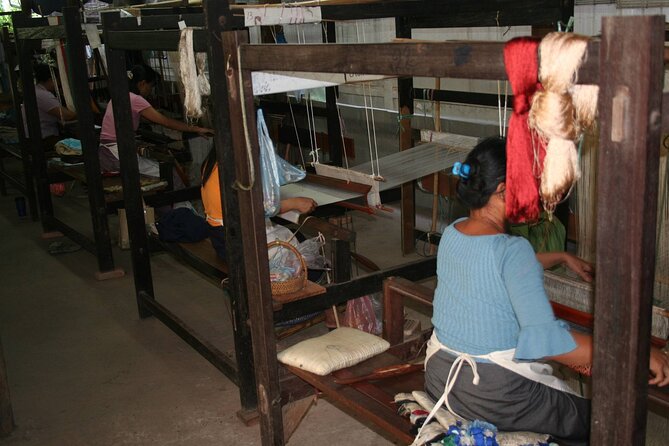
After lunch, the route visits Carol Cassidy Lao Textiles. This is a welcome change from monuments and statues because it introduces a living craft tradition.
You learn about weaving and the process of making natural dyes for fabrics. The stop gives you a better sense of the labor behind Lao textiles, from preparing color to producing the finished cloth. It also provides a chance to see local handicrafts in a more direct way than simply passing a shop.
The information provided does not promise a long workshop or a hands-on weaving lesson, so set your expectations accordingly. Think of it as an educational craft visit that may also give you the chance to consider a textile purchase, with personal expenses separate from the tour.
I like this stop because it keeps the day from becoming a checklist of temples. You get religious art, national monuments, recent history, and local craft in one route. That variety is one of the tour’s strongest features.
Buddha Park on the Mekong
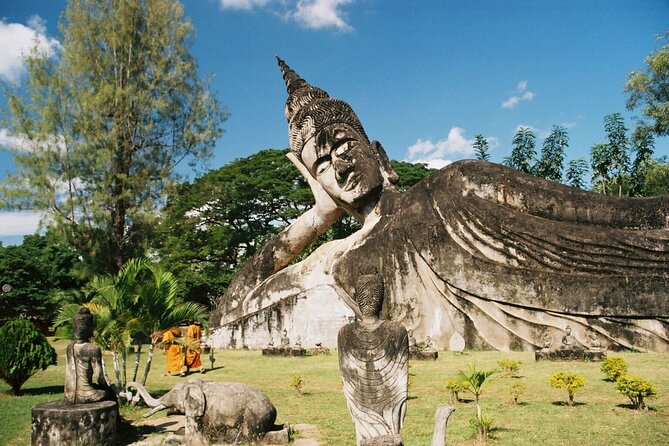
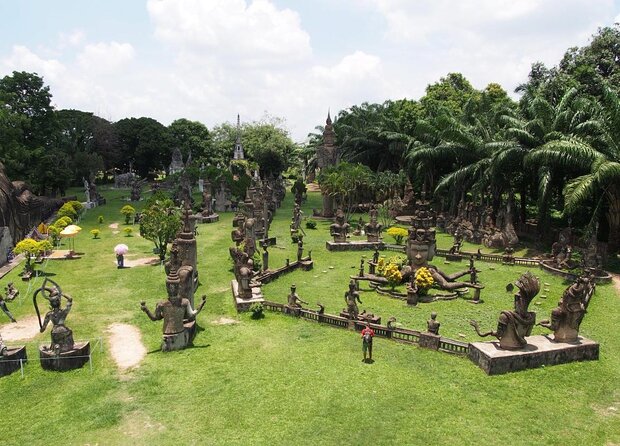
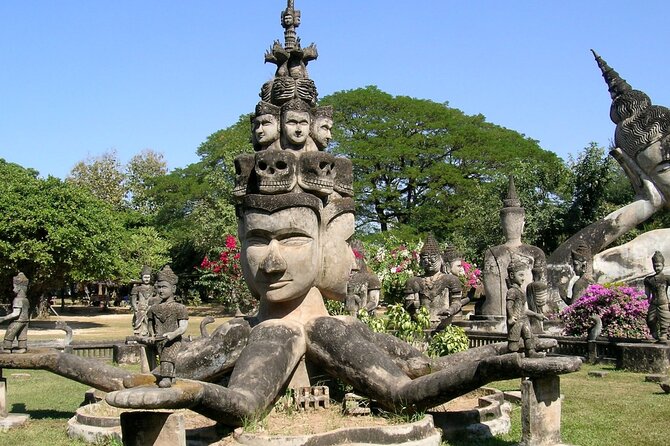
Buddha Park is the final major stop, with about two hours planned. It lies on the banks of the Mekong and contains Hindu and Buddhist statues in modern-style forms, including the largest reclining Buddha in Laos.
This is not the same kind of religious site as Wat Si Saket. Buddha Park is a sculpture park, and its appeal comes from its unusual shapes, large scale, and mixture of religious ideas. You may find the statues fascinating, playful, puzzling, or a little strange. That is part of the point.
The park was created by a Lao man who drew on Hindu and Buddhist imagery. The supplied information does not provide his name or a full account of his teachings, so ask your guide for more background if that interests you.
Two hours gives you time to walk around rather than make a quick stop for one photograph. The outdoor setting also means heat can again affect your enjoyment. Drink water, use sun protection, and take breaks when needed.
Buddha Park is located away from the central city sights, so including it in a private tour has real practical value. You avoid arranging a separate trip and can return directly to your hotel after the park. At the same time, the drive means this is a long day with several transfers. If you prefer slow museum visits or long meals, the schedule may feel full.
Is $130 per person a fair price?
The listed cost is $130 per person. For a private, full-day tour with hotel pickup, hotel drop-off, an English-speaking guide, admission, lunch, and water, the package is convenient and easy to use.
Still, the price is high enough that you should compare it with your own priorities. A basic local meal adds little value by itself, and Vientiane’s individual sights may cost less to visit independently. The strongest reason to pay the premium is the private transport and the ability to combine central monuments with Buddha Park and the textile stop in one organized day.
The guide can also change the calculation. A warm, well-informed guide such as Khong or Algo G can turn the route into a coherent introduction to Lao religion, politics, and daily craft. A less talkative guide may leave you feeling that you paid mainly for transport.
The experience has an average score of 4.4 from 10 ratings, which suggests a generally positive but not flawless record. Praise centers on friendly guides, useful explanations, good energy, and enjoyable lunch choices. The weaker points are value for money, heat, stairs, and the possibility of having to draw information out of the guide.
For two people or a small group, calculate the total cost against separate transport and guide hire. Group discounts may be available, but the exact reduction is not stated. Since this is a private activity, the more people in your booking, the easier it may be to justify the cost per person.
Who will enjoy this route most?
I would choose this tour if you have one full day in Vientiane and want the city’s main sights arranged for you. It suits first-time visitors who want historical context without spending time negotiating separate transport.
It is also a good fit if you want more than temples. The textile visit and Buddha Park add variety, while Patuxai gives the day a modern political marker. Families with older children may enjoy the large sculptures at Buddha Park, though the heat and walking require sensible pacing.
The route is less suited to you if you are highly price-sensitive, prefer independent sightseeing, or want a slow day at only one or two sites. It may also be a poor match if hot weather and stairs make outdoor touring uncomfortable.
Most people can take part, and the experience combines driving with walking. Children under two are free, while children aged 12 and older are charged as adults. The information does not give a detailed accessibility plan, so ask the provider before booking if you have specific mobility needs.
Practical ways to get more from the day
Start with questions. Ask your guide to connect the 1828 conflict at Wat Si Saket with the wider story of the region, then ask how Pha That Luang became a national symbol. At Buddha Park, ask about the ideas behind the Hindu and Buddhist figures.
Bring light, respectful clothing, comfortable shoes, sun protection, and money for drinks or personal purchases. Water is included, but drinks beyond that are not.
Keep your schedule open after late afternoon. The tour ends with hotel drop-off, but the exact return time may depend on traffic, time spent at each stop, and the distance to Buddha Park.
The tour offers free cancellation if you cancel at least 24 hours before the local start time. Changes or cancellations made inside that period are not accepted for a refund.
Should you book this Vientiane tour?
Book it if you value convenience, a private guide, and a full day that reaches both the city center and Buddha Park. The best version of this experience includes an engaging guide such as Khong or Algo G, who can connect the sites instead of simply naming them.
Think twice if $130 feels steep for a day with a simple lunch. You can gain much of the route’s value only when the guide provides strong explanations and the private transport saves you real effort.
My call: this is a sensible first-day orientation to Vientiane, especially for a short stay. Confirm the pickup details, ask for an active English-speaking guide, and be ready for heat. If those points suit you, the range of sights makes this a practical way to meet the capital.
FAQ
What time does the Vientiane city tour start?
The tour starts at 8:30 a.m.
How long does the experience last?
The tour lasts approximately eight hours and ends with hotel drop-off in the late afternoon.
Is hotel pickup and drop-off included?
Yes. Hotel pickup and drop-off are included.
Is lunch included in the price?
Yes. Lunch at a local restaurant is included. Drinks other than the provided drinking water are not included.
Which main places does the tour visit?
The route includes Wat Si Saket, Pha That Luang, Patuxai Monument, Carol Cassidy Lao Textiles, and Buddha Park.
Is this a private tour?
Yes. Only your group participates in the activity.
What is the cancellation policy?
You can cancel up to 24 hours before the experience starts for a full refund. Cancellations or changes made less than 24 hours before the start time are not accepted for a refund.
Just added around Vientiane
- Vientiane: Lao Cultural Attire Rental Experience★ 5.0 · 3 reviews
- Vientiane: Half-Day City Tour – Morning or Afternoon★ 4.0 · 3 reviews
- Vientiane Private Lao Cooking Class with Market Tour★ 4.0 · 3 reviews
- Vientiane Private Walking Tour With A Guide (Private Tour)★ 4.5 · 3 reviews
- Vientiane: Art, Culture, & Inspiration Guided Day Tour★ 5.0 · 3 reviews
- Vientiane Day Trip By Bike To Tad Moon Waterfall★ 4.5 · 3 reviews
- Half Day Exploring the Charms of Vientiane and hotel pickup★ 4.9 · 4 reviews
- Private Tour Vientiane – VangVieng by Express Train★ 5.0 · 4 reviews
Buddha Park Tours, compared.
Vientiane City Highlights Tour with Buddha Park & Lunch
Read our review →
Private Full-Day Tour with Buddha Park and Lunch
Read our review →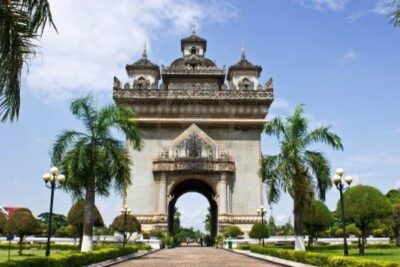
Guided Vientiane City and Buddha Park Full-Day Tour
Read our review →Browse the lists this tour appears in