
Reviewed · LUANG PRABANG TOURS
Luang Prabang Plates Food Tour with 15+ Tastings
Luang Prabang’s best food hour comes early, when the monks have finished their alms rounds and the city’s cooks are feeding local families. This four-hour tour takes you from bubbling pots and sizzling grills to a wood-fired bakery, with 15 or more tastings spread across 9 to 10 stops.
I like two things right away: you eat food prepared fresh for the group instead of picking over dishes that have been sitting out, and the small group, limited to eight, gives guides such as Mone, Toun, Latda, and Bounleua room to explain what you are eating. The main drawback is dietary: this is not suitable for vegans, vegetarians, severe allergies, halal diets, or celiac disease.
Key points at a glance
- Start after the alms round: The morning timing catches Luang Prabang when breakfast stalls and markets are doing their everyday work.
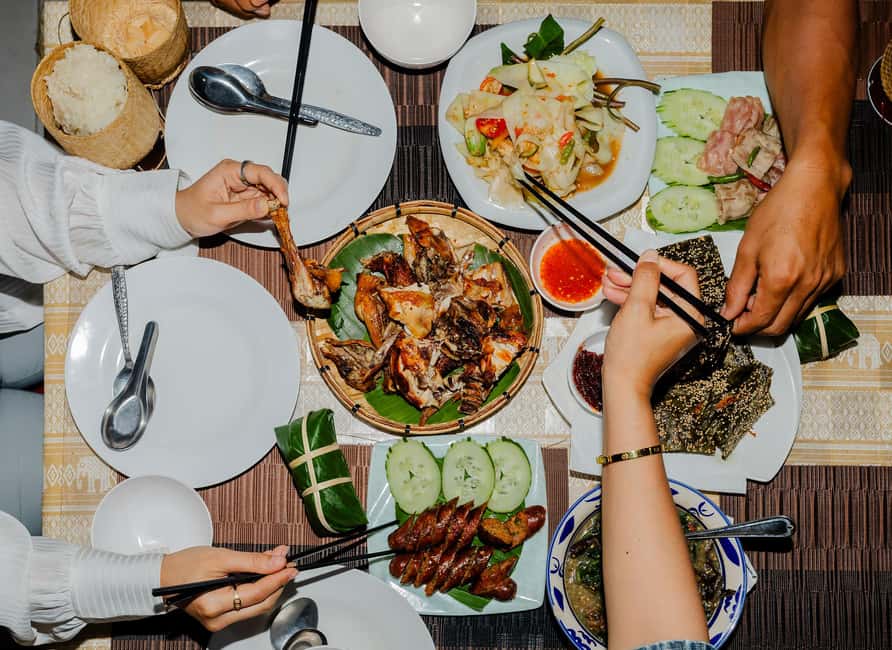
- 15 or more tastings: Try Lao noodles, soups, salads, grilled meats, fried snacks, and bakery fare without ordering a full plate at every stop.
- A real market walk: See local buying and selling of fruit, vegetables, herbs, and spices as part of the food lesson.
- A traditional bakery visit: An invitation to one of the last remaining brick-oven bakers adds a cultural stop beyond ordinary street food.
- Small groups and local guides: The tour is capped at eight people and is led in English.
- Walking plus tuk-tuk: You walk through the old city first, then use a tuk-tuk for the second half.
Why Luang Prabang breakfast deserves four hours
Many visitors associate Luang Prabang with temples, the Mekong, and the night market. Food is often treated as a side note. That misses the point. Morning cooking gives you a direct look at how the city eats, shops, and starts the day.
This is not a restaurant crawl built around polished dining rooms. You move through streets, markets, small local eateries, and vendor stalls. The food arrives in modest portions, but the number of stops creates a broad picture of Lao cooking.
You might taste smoky khao soy noodles, fried mungbean cakes, herby soups, spicy salads, and charcoal-grilled chicken. The exact balance can vary with the day’s vendors and availability, but the aim is clear: show you the food locals use to begin the day, not simply the dishes most often printed on tourist menus.
The morning slot matters. Stalls are active, pots are hot, and market produce is being bought and sold. If you prefer a slow hotel breakfast, this tour asks you to give that up. I think that is a fair trade, but you should arrive ready to eat soon after the meeting time.
More food tours in Luang Prabang:
- Luang Prabang Evening Food Tour by Tuk-Tuk
★ 4.5 · 68 reviews - Luang Prabang: Mekong Meals Food Tour with 15+ Tastings
★ 4.9 · 58 reviews - Mekong Meals Food Tour with 15+ Tastings
★ 5.0 · 37 reviews
Starting beside the Mekong at Pasaniyom Traditional Café
The meeting point is opposite Pasaniyom Traditional Café, on the riverside sidewalk beside the Mekong. It is centrally placed and easy to reach from many Luang Prabang hotels, but hotel pickup is not included.
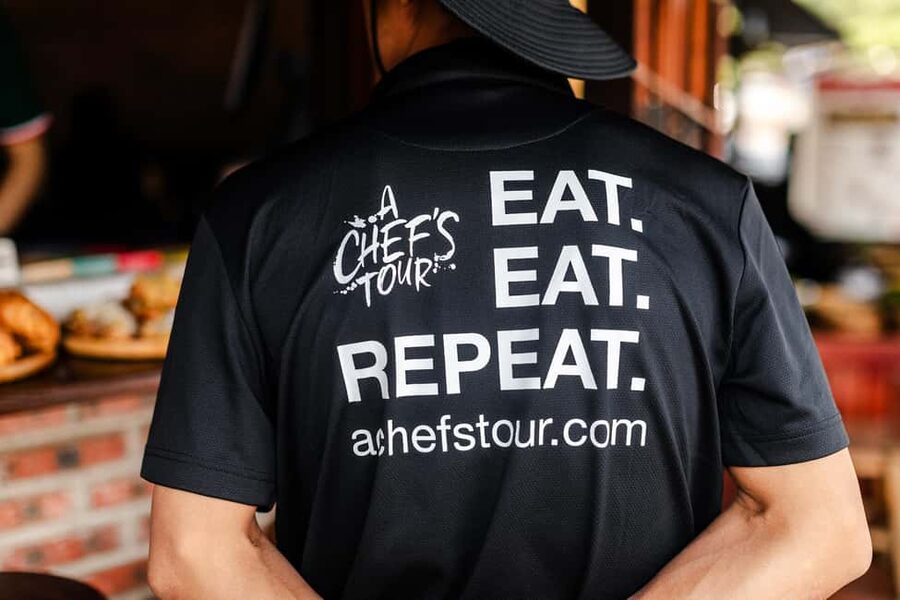
Look for the A Chef’s Tour host, usually wearing a black polo shirt. This simple meeting arrangement keeps the tour easy to join, though you should allow time to find the café and riverside pavement rather than assuming a vehicle will collect you.
The tour lasts about four hours and finishes at the Tourist Information Center at the Machi-Zukuri Community. That point is useful for planning the rest of your day. You begin near the river and finish elsewhere in the old city, so think of the tour as a moving meal rather than a loop back to your hotel.
You will walk between several stops. Comfortable shoes are more important than stylish ones, especially if the morning is wet. The tour runs in rain or sunshine, and many food stops are sheltered, but an umbrella or rain jacket is sensible for the gaps between stalls.
The first walking stops: noodles, snacks, and local breakfast habits
The opening part is on foot through Luang Prabang. Your guide introduces dishes as you go, giving you context about ingredients, preparation, and the people selling them.
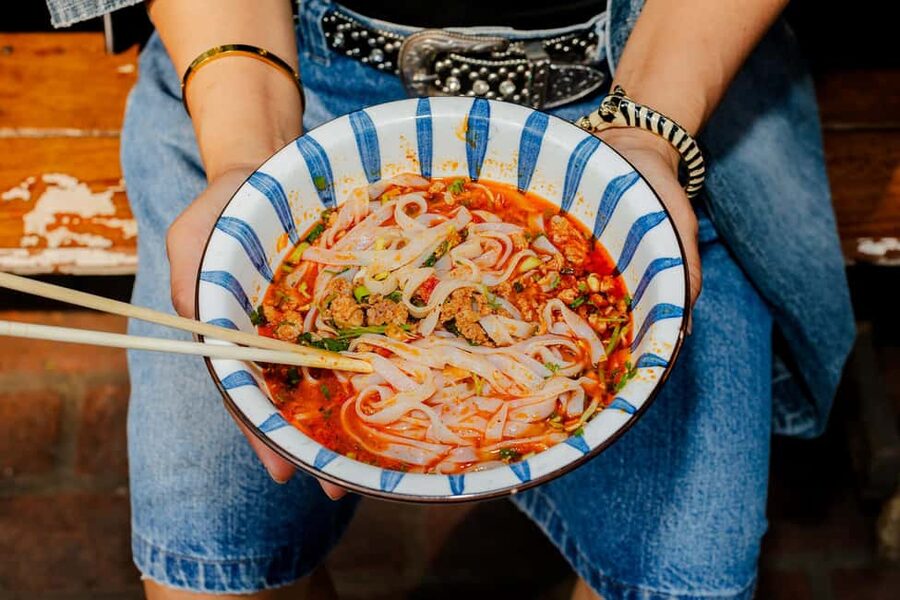
Khao soy is one of the useful early reference points. Lao khao soy is not the same as the coconut-heavy noodle soups found elsewhere in Southeast Asia. It has its own character, and tasting it alongside other morning dishes helps you notice the range of Lao flavors rather than placing every noodle bowl in the same category.
Fried mungbean cakes bring a different texture. Other stops may include herby soups, spicy salads, and grilled foods. The appeal is the contrast: soft noodles, crisp fried snacks, fresh herbs, hot broth, and smoky meat all appear across the morning.
This format also solves a common problem with food tours. If you ordered full portions of 15 dishes, you would be defeated before the midpoint. Small tastings let you sample widely, though the total amount of food is still substantial.
One useful tip is to pace yourself. A full breakfast before arrival makes little sense, and even a light snack may be more than you need. Water is provided, and coffee and tea are part of the early refreshments according to the tour experience, but alcoholic drinks are not included.
Meeting the vendors behind the food
The strongest part of the tour is the human scale. You are not only handed a plate and told its name. The route introduces you to generations-old street vendors and local eateries, helping you connect dishes with the people who keep making them.
That context is valuable in Luang Prabang, where the most rewarding food can be easy to miss. A stall may have no clear menu in English. A small eatery may look too plain to attract someone who does not know what to order. A local guide removes much of that guesswork.
Guides Mone, Toun, Latda, and Bounleua have each been praised for friendly, clear explanations and an easy manner. Toun, in particular, is described as attentive and accommodating, while Latda is noted for high energy and animated explanations. Those differences matter less than the shared advantage of having an English-speaking guide who can bridge the gap between a food name and a food tradition.
The stops are also practical for the rest of your trip. If you find a breakfast you like, you can return on your own. The route is not just a one-time meal. It gives you names, flavors, and enough confidence to make better food choices afterward.
A few more Luang Prabang trips worth a look
- Luang Prabang: Foodie Walking Tour & Monk Blessing
★ 4.7 · 66 reviews - Prabang Plates Food Tour with 15+ Tastings
★ 5.0 · 15 reviews - Luang Prabang Street Food Culture, Paper Handicraft Village Tour
★ 5.0 · 10 reviews - Luang Prabang Foodie Walking Tour and Monk Blessing
★ 5.0 · 7 reviews
Through the morning market with herbs, fruit, and spices
The market walk adds something that a normal tasting menu cannot. You see the ingredients before they reach the bowl or grill.
Expect to pass displays of fruit, vegetables, herbs, and spices while local shoppers and sellers go about their morning business. This is not a staged market show built only for visitors. The value is in watching ordinary food shopping take place and hearing your guide explain what matters in Lao cooking.
For you, the market is also a chance to reset between tastings. Four hours of eating can become tiring if every minute is spent at a table. Walking through produce stalls gives the morning a better rhythm.
Be polite with cameras. The provided information does not promise a photography-focused experience, so treat the market as a working place first. Stay close enough to hear the guide, since market streets can be busy and the group may move on quickly.
The tuk-tuk ride and the second half of the feast
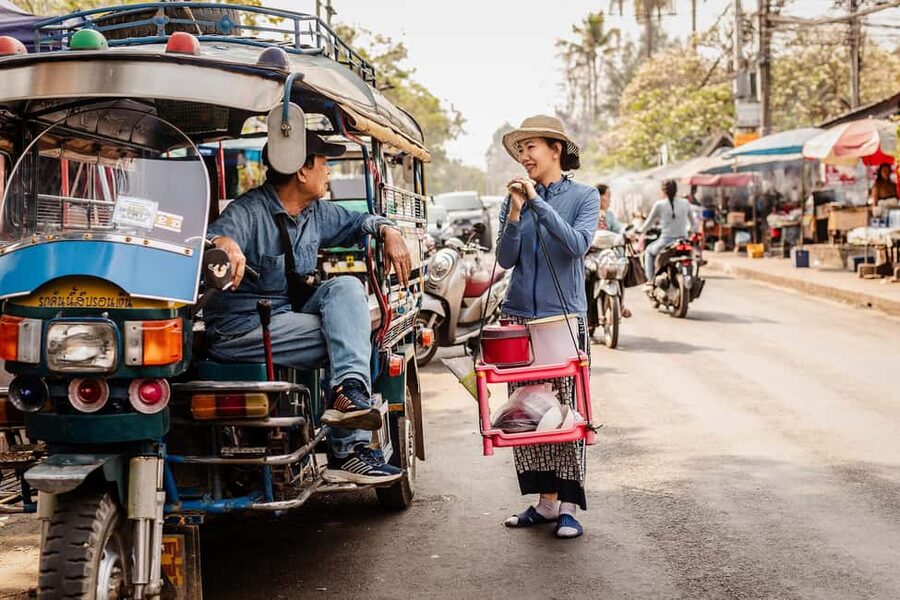
The second half uses a tuk-tuk to reach additional food stops. Some of these places might be walkable, but the ride saves time and gives the tour a wider reach than a strictly pedestrian route.
That transport choice matters in a four-hour tour. Without it, you would spend more of the morning covering distance and less time eating. The tuk-tuk also adds a distinctly local way to move between parts of Luang Prabang, although it is not a sightseeing ride with a narrated route.
The group limit of eight works well here. A large group can make a tuk-tuk transfer awkward and can crowd small food stalls. With fewer people, it is easier to stay together, ask questions, and share food without turning each stop into a production.
If you are traveling alone, a small-group tour can be especially useful. One booking has resulted in a private tour when no other person had signed up, though you should not assume that will happen on your date. Private tours or groups of nine or more require separate contact with the provider.
The brick-oven bakery invitation
The bakery visit is one of the tour’s most distinctive details. You receive an exclusive invitation to a traditional bakery that uses wood-fired stoves and produces fresh baguettes.
That stop shows a side of Luang Prabang’s food culture that you might not find by simply wandering the market. The bakery connects local cooking with the French influence visible in Lao bread, but it remains grounded in a working, traditional shop rather than a polished café experience.
It is also a welcome change in texture and pace. After noodles, soups, salads, and grilled food, fresh bread offers a different kind of tasting. The visit is not just about eating a baguette. It gives you a look at a fading craft, described as one of the last remaining brick-oven baking operations of its kind.
Because the bakery is a working local business, you should expect an informal visit rather than a museum-style demonstration. The charm is precisely that it feels connected to daily life.
How much food do you actually get?
The tour includes more than 15 tastings, and that is a serious amount for one morning. Even if some servings are small, the meal adds up across 9 to 10 stops.
I would not book this as a light sampler. It is closer to brunch with a long series of bites. Come hungry, but do not arrive dehydrated or exhausted from a late night. Water is included, and regular bathroom breaks are part of the pacing.
One practical concern is food waste. The portions are designed for sharing and sampling, but one group of four found the amount generous enough that fewer servings shared between two people might still have been filling. That is not a reason to avoid the tour, but it is a reminder to tell your guide early if you have a small appetite.
The broad variety is the main value. You are not paying for one large meal. You are paying for access to many dishes, several vendors, market guidance, transport, and explanations that would be difficult to assemble on your own in a single morning.
Is $45 a fair price?
At $45 per person, the tour is not the cheapest way to eat breakfast in Luang Prabang. You can certainly buy individual dishes from stalls for far less.
The comparison changes when you add up what is included: at least 15 tastings, 9 to 10 stops, an English-speaking foodie guide, bottled water, the market visit, the bakery invitation, and tuk-tuk transport for the second half. You are also paying for the time saved finding the right vendors and figuring out unfamiliar foods.
I see the price as reasonable for a first morning in town, especially if you want food to be part of your cultural introduction rather than a quick meal between sights. It is less compelling for someone who already knows Luang Prabang well, speaks with local vendors comfortably, or prefers choosing one dish at a time.
The small group improves the value. A cap of eight means the guide can explain more and the route can use smaller stalls. If the tour fills, you will not have the intimacy of a private walk, but it remains a much more manageable size than a large coach-style food outing.
Dietary restrictions and who should skip it
This tour is built around local street food, so its limits are firm.
It is unsuitable for vegans and vegetarians. A vegetarian guest may have three or four fewer tastings, and the provider does not present this as a suitable vegetarian experience. Pork appears in two or three tastings, with limited alternatives if pork is your only restriction.
It is also unsuitable for severe food allergies and halal diets because of traces and cross-contamination at street stalls and small eateries. Mild gluten or lactose intolerance may be manageable, but celiac disease is not advised because gluten appears in four or five tastings, including unavoidable soy sauce.
Pregnant women are listed among those for whom the activity is not suitable. If you have any medical or dietary concern, this is not the kind of tour to book and hope for the best. The food is the point, and the route cannot promise controlled preparation.
Practical timing, weather, and group comfort
Plan on four hours of steady activity. You will walk, stop to eat, walk again, visit the market, use a tuk-tuk, and finish at the Tourist Information Center.
Wear comfortable shoes and weather-appropriate clothing. Rain gear or an umbrella is useful because the tour operates in wet weather, even though most eating places have shelter.
English is the tour language. The guide is an important part of the experience, so listen for explanations rather than treating the stops as a simple list of free samples. The strongest guides, including Toun and Latda, appear to bring a lot of personality to the morning, but the quality of any group experience also depends on the day’s guide and the group’s pace.
Free cancellation is available up to 24 hours before the start time, and you can reserve now and pay later. Those options help if your Luang Prabang schedule is still shifting, but the key decision is simpler: can you commit to a large breakfast and the dietary limits?
Should you book this Luang Prabang food tour?
Book it if you want a practical introduction to Lao food, prefer small local stops to formal restaurants, and like learning through conversation. It is especially useful on your first morning in Luang Prabang, when the market, vendors, and breakfast habits can shape the rest of your visit.
You should also book it if you want to taste widely without ordering full portions, and if a tuk-tuk ride and bakery visit sound as appealing as the food itself. The route gives you dishes to remember and places you can return to later.
Skip it if you need strict allergy control, halal or vegetarian food, or a quiet, leisurely brunch. Also skip it if you dislike eating early or feel uncomfortable with street-side preparation.
For the right eater, $45 buys more than breakfast. It buys a guided introduction to the city’s morning rhythm, with enough variety to turn unfamiliar dishes into food you can recognize and seek out again.
FAQ
Where does the Luang Prabang food tour start?
It starts opposite Pasaniyom Traditional Café, beside the Mekong River. The guide meets you on the riverside sidewalk, usually wearing a black polo shirt.
Where does the tour finish?
The tour finishes at the Tourist Information Center at the Machi-Zukuri Community.
How long does the food tour last?
The experience lasts four hours.
How many tastings are included?
The tour includes 15 or more food tastings across approximately 9 to 10 stops around the old city.
Is the tour suitable for vegetarians or vegans?
No. The tour is unsuitable for vegetarians and vegans. Vegetarian guests would miss three or four tastings, and there are limited alternatives.
Does the tour include tuk-tuk transport?
Yes. Tuk-tuk transport is included for the second half of the tour. The first part involves walking between food stops and through the morning market.
Just added around Luang Prabang
- Luangprabang: Dinner with Lao Traditional Dance Performance★ 4.0 · 3 reviews
- Private Luang Prabang City Tour★ 5.0 · 3 reviews
- Luang Prabang Night-time Explorer★ 3.5 · 3 reviews
- Sunset Cruise in Luang Prabang with Live Performance★ 4.5 · 3 reviews
- A Relaxing Day at the Kuang Si Falls★ 4.5 · 3 reviews
- Luang Prabang Private Full-Day Tour and Lunch★ 4.7 · 3 reviews
- Luang Prabang: Local Village & Kuang Si Falls Private Tour★ 4.9 · 3 reviews
- Luang Prabang: Mekong River Cooking Class with Hotel Pickup★ 5.0 · 3 reviews
Luang Prabang Tours, compared.
Half Day Mekong Cruise to Pak Ou Caves (Morning / Afternoon)
Read our review →
Luang Prabang: UNESCO World Heritage City Highlights Tour
Read our review →

Luang Prabang: Bamboo Weaving Workshop & Cooking Class
Read our review →
Browse the lists this tour appears in